
Movie School Free » Film Production Classes » Post-Production Roles in Film
When filming ends, the movie is far from finished. Post-production roles bring together editors, sound specialists, colorists, VFX artists, composers, and other professionals who transform recorded material into a finished film.
Post-production is often associated almost entirely with editing. Editing is certainly one of its most important parts, but a finished movie requires much more than assembling shots. Dialogue needs to be cleaned and edited, sound effects and Foley need to be created, music needs to be integrated, visual effects need to be completed, and the final image needs to be color graded and prepared for delivery.
On a large production, these responsibilities may be divided among dozens of specialists. On a small independent film, one person may perform several of them.
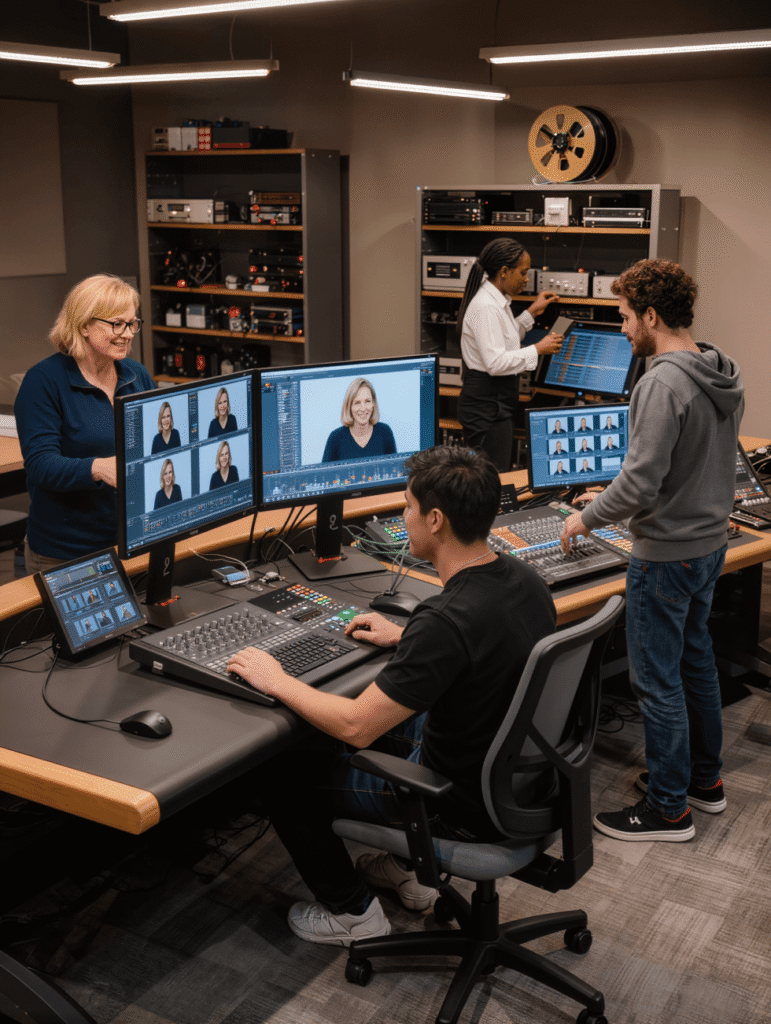
Understanding the key post-production roles in film therefore means understanding not only what each person does, but also how their work fits together.
In this Film Production Class, we want to cover the most important aspects of film production, and the crew members of the post-production stage are something many film schools tend to ignore.
Post-production is the stage of filmmaking in which the recorded material is shaped, refined, and prepared for its final presentation.
The process can include:
Not every production uses exactly the same workflow. A documentary, independent short film, Hollywood feature, television episode, and commercial may all organize post-production differently.
The important point is that post-production is a team process.
| Role | Main Responsibility |
|---|---|
| Post-Production Supervisor | Coordinates the post-production process |
| Post-Production Coordinator | Supports scheduling, communication, and organization |
| Film Editor | Shapes the story through picture editing |
| Assistant Editor | Organizes media and supports the editorial process |
| Online Editor | Conforms and prepares the final picture |
| Sound Designer | Creates and shapes the film's sound world |
| Dialogue Editor | Edits and prepares dialogue |
| Foley Artist | Creates synchronized physical sounds |
| Re-Recording Mixer | Combines the different soundtrack elements |
| Colorist | Corrects and grades the final image |
| VFX Supervisor | Oversees the visual effects process |
| VFX Artist / Compositor | Creates and integrates visual effects |
| Film Composer | Creates original music |
| Music Supervisor | Manages and selects existing music |
| Music Editor | Prepares and edits music for the picture |
The size of the team varies, but these functions form the foundation of many professional post-production workflows.
Before looking at the individual creative departments, it is useful to understand the people who help coordinate the process.
The Post-Production Supervisor helps keep the entire post-production process moving.
Unlike an editor or colorist, the supervisor does not normally create the film’s picture or sound directly. Instead, the role involves coordinating the people, schedules, budgets, and technical requirements needed to complete the project.
Responsibilities can include:
This becomes particularly important on larger productions, where several departments or outside companies may be working on the film at the same time.
The Post-Production Supervisor helps ensure that all of those separate pieces continue moving toward the same finished film.
The Post-Production Coordinator supports the day-to-day organization of the post-production team.
Depending on the production, this can include managing schedules, meetings, files, deliveries, paperwork, and communication between departments.
The distinction between a coordinator and a supervisor varies between productions, but the basic idea is simple: the coordinator helps keep the practical side of post-production organized.
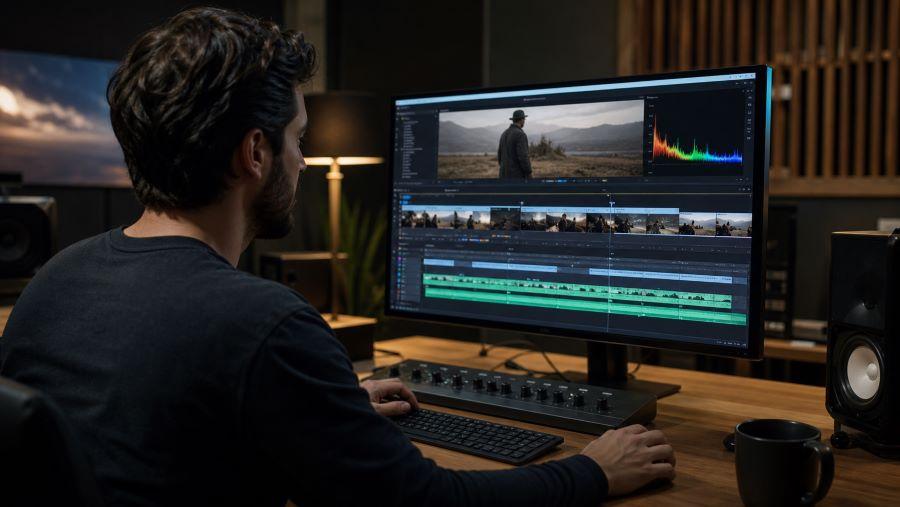
Editing is where the recorded material begins to become a movie.
During production, filmmakers create hundreds or thousands of individual pieces of footage. The editor must determine which performances, shots, reactions, and moments belong in the final film and how they should be arranged.
In our video editing course we talk a lot about how the Film Editor, also called the Picture Editor, shapes the movie through the selection and arrangement of images.
The editor works with the director to construct scenes and sequences, but the job is not simply to put the shots in the order described by the screenplay.
Editing can determine:
A fraction of a second can change the meaning of a cut.
A reaction shot can completely change our understanding of a character. Removing a line of dialogue can make a scene more mysterious. Holding on a character’s face for another moment can transform a dramatic beat.
This is why editing is one of the most creative post-production roles.
The editor and director often spend a significant amount of time experimenting with different versions of scenes. The goal is not simply to reproduce what was planned during pre-production, but to discover the strongest version of the film using the material that was actually captured.
The Assistant Editor supports the editorial department and handles much of the organizational and technical work surrounding the edit.
Responsibilities may include:
On a large production, the assistant editor can become an important connection between editorial and the rest of the post-production team.
The Assistant Editor is therefore not simply a junior Film Editor. The job requires a strong understanding of media management, editing systems, technical workflows, and the needs of the entire post-production process.
The Online Editor works during the finishing stage of picture post-production.
The creative edit is often performed using an editing workflow designed to make large amounts of footage easy to work with. Once the picture is locked, the project can be conformed using the original high-quality media and prepared for final finishing.
Online editing may include:
The exact responsibilities of an Online Editor vary between productions, and some projects combine online editing with other finishing roles.
A film’s soundtrack is much more than the dialogue recorded on set.
The final soundtrack can contain dialogue, ADR, Foley, sound effects, ambience, designed sounds, and music. Each layer can influence how the audience understands and experiences the story.
The Sound Designer helps create the sonic world of the movie.
This may involve recording, selecting, editing, manipulating, and creating sounds to support the story.
Sound design can include:
Consider a science-fiction film. The spaceship’s engines, computer interfaces, doors, weapons, alarms, and alien creatures may have no real-world sound to record. The sound designer has to create a believable sonic language for that world.
Even in realistic films, sound design can shape the audience’s perception of a location or event.
A quiet room may be made to feel tense through subtle ambience. A familiar environment can become unsettling through an unexpected sound.
Sound design is therefore not simply about making a film louder or more realistic. It is another storytelling tool.
The Dialogue Editor works with the dialogue recorded during production and prepares it for the final mix.
Production recordings can contain unwanted background noise, microphone problems, changes between takes, or inconsistencies between locations.
The dialogue editor may:
The goal is to preserve the actors’ performances while making the dialogue clear and consistent.
The Foley Artist recreates physical sounds while watching the picture.
Typical Foley sounds include:.
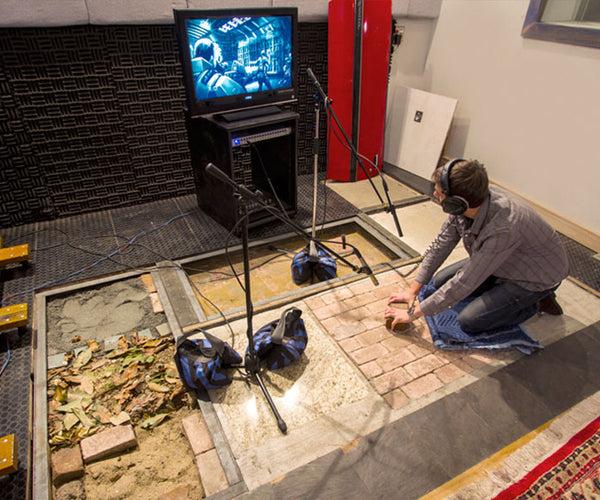
A Foley artist may perform these actions in a studio while watching the scene so that the recorded sounds synchronize precisely with the movement on screen.
Foley can give a character physical presence.
The sound of someone walking is not necessarily just “footsteps.” The sound can communicate the character’s weight, speed, emotional state, and environment.
The Re-Recording Mixer brings the different elements of the soundtrack together into the final mix.
The soundtrack may contain dialogue, ADR, Foley, sound effects, ambience, and music.
The mixer determines how these elements relate to one another.
For example, a dramatic scene may require dialogue to remain clear while music gradually becomes more prominent. In another scene, sound effects may intentionally overwhelm the dialogue to place the audience inside a character’s experience.
The final mix is therefore both a technical and creative stage of filmmaking.
As the picture edit nears completion, the image still needs refinement.
This is where color grading, visual effects, and other finishing processes become important.
The Colorist is responsible for color correction and color grading.
Color correction generally involves making images technically and visually consistent. This can include correcting exposure, white balance, contrast, and differences between shots.
Color grading goes further by helping create the visual character of the finished film.
A colorist may work on:
Color can influence the audience without drawing attention to itself.
A warm image can create a different feeling from a cold one. Lower contrast can produce a softer appearance, while strong contrast can make an image feel harsher or more dramatic.
The Colorist therefore contributes to the storytelling as well as the technical finishing of the picture.
The VFX Supervisor oversees the visual effects process.
Visual effects can range from enormous digital environments to extremely subtle changes that the audience may never consciously notice.
A VFX Supervisor may work with the:
VFX can be used for:
The VFX Supervisor helps determine how these effects should be created and how they should fit into the visual language of the film.
Importantly, VFX is not necessarily something that happens only after editing. VFX work may begin while the edit is still changing, and some visual effects decisions can influence editorial decisions as well.
Visual effects are usually created by teams of specialists rather than a single “VFX artist.”
Different artists may work on modeling, animation, simulation, compositing, tracking, lighting, and other areas.
A Compositor, for example, combines multiple visual elements into a single image.
A final shot might contain:
The compositor’s job is to make these elements appear to belong together in the same shot.
Music can dramatically change the emotional meaning of a scene.
A piece of music can create anticipation, reveal a character’s internal state, create irony, or completely change how the audience interprets an image.
Several different post-production roles can be involved in the process.
The Film Composer creates original music for the movie.
The composer works with the director to understand the emotional and dramatic purpose of the music.
A score can:
The relationship between editing and music is particularly important.
If the editor changes the length of a scene, a musical cue may need to change with it. Conversely, a musical idea can sometimes influence the way a sequence is edited.
The Music Supervisor generally works with existing music rather than creating an original score.
The role can involve:
Music supervision can be particularly important in films that rely heavily on popular or previously recorded songs.
The Music Editor works with music and picture to make sure the musical material functions properly within the film.
Responsibilities can include:
The Music Editor can serve as an important connection between the composer, director, editorial department, and sound team.
Understanding individual post-production roles is useful, but understanding how they interact is even more important.
A film does not normally move through post-production as a perfectly straight line.
A simplified workflow might look like this:
Production Footage → Editing → Picture Lock → VFX / Sound / Music → Color → Final Mix → Online / Finishing → QC → Deliverables
But the reality is more interconnected.
VFX may begin before Picture Lock. The composer may write music while scenes are still being edited. Sound designers may begin building the sonic world before the final edit is complete.
A change in one department can also affect several others.
For example, if the editor removes a scene:
This is why communication is such an important part of the post-production process.
Picture Lock is a major milestone in post-production.
It means that the editorial team has reached a version of the picture that is considered final enough for the remaining departments to complete their work.
Picture Lock does not necessarily mean that absolutely nothing can ever change again. Films sometimes continue to change after this point.
However, major picture changes become increasingly expensive once VFX, sound, music, color, and finishing have begun working from the locked version.
For example, changing the length of a shot after visual effects have been completed may require the VFX team to redo work. Changing a scene after the music has been recorded may require the composer to revise the score.
Picture Lock therefore provides a degree of stability to the rest of the post-production team.
If the editor shapes the picture, the sound designer creates the soundscape, the colorist grades the image, and the composer writes the music, who is responsible for the finished movie?
The answer varies between productions, but as we learn in our film directing course, the director remains a central creative figure throughout post-production.
The director may work with the editor to refine scenes, review VFX, collaborate with the sound team, discuss music with the composer, and participate in the color grading process.
However, the director is not expected to be an expert in every technical discipline.
That is one of the strengths of a professional post-production team.
The director provides the overall creative direction while specialized collaborators contribute their own knowledge and experience.
The best collaboration is not necessarily about the director having an answer for every problem. A good post-production specialist can suggest possibilities that the director had not considered.
Large productions can afford to hire specialists for many individual functions. Independent filmmakers often have to work differently.
On a low-budget production, one person might perform several post-production roles.
For example:
This does not mean that the functions disappear.
Someone still has to organize the footage. Someone needs to construct the edit. Someone needs to prepare the dialogue, create sound effects, mix the soundtrack, grade the image, and prepare the final files.
The roles may be combined, but the functions still need to be performed.
Understanding the professional structure of post-production can therefore help independent filmmakers make better decisions about what they can handle themselves and which tasks are worth hiring a specialist to perform.
Although every production has its own workflow, the journey from recorded footage to finished film generally involves several major stages.
The recorded media is backed up, ingested, synchronized, and organized so that the editorial team can work efficiently.
The editor works with the footage to construct scenes, sequences, and eventually the complete film.
The picture reaches a sufficiently stable version for the remaining post-production departments to complete their work.
Visual effects are completed and incorporated into the final picture.
Dialogue, ADR, Foley, effects, ambience, and other sound elements are edited and designed.
Original score and/or licensed music is prepared and integrated into the soundtrack.
The Colorist corrects and grades the image, matching shots and establishing the final visual appearance.
Dialogue, music, Foley, effects, and ambience are combined into the final soundtrack.
The completed film is reviewed for technical problems, missing elements, picture issues, audio problems, and other errors.
The completed film is exported and prepared in the formats required for its intended distribution.
Depending on the project, deliverables can include different video masters, audio versions, subtitles, captions, and other technical materials.
Larger productions may also involve specialists such as subtitlers, captioning professionals, archive producers, and deliverables specialists. Read our article on video editing’s stages to learn more.
The main post-production roles can include Film Editor, Assistant Editor, Post-Production Supervisor, Sound Designer, Dialogue Editor, Foley Artist, Re-Recording Mixer, Colorist, VFX Supervisor, VFX Artists, Composer, Music Supervisor, and Music Editor. Larger productions may employ many additional specialists.
A Film Editor shapes the recorded footage into the finished story. The editor selects takes, constructs scenes, controls pacing, and works with the director to determine how the audience experiences the film.
A Post-Production Supervisor coordinates the practical side of post-production, including schedules, budgets, communication between departments, screenings, and deliveries.
A Colorist corrects and grades the image. The work includes matching shots, balancing exposure and color, maintaining consistency, and helping create the visual look of the finished film.
A Sound Designer creates and shapes the sonic world of the film using sound effects, atmospheres, recorded sounds, and designed sounds to support the story and mood.
A VFX Supervisor oversees the visual effects process and works with filmmakers and VFX artists to determine how effects should be created and integrated into the finished film.
A post-production team can include editors, assistant editors, supervisors, coordinators, sound designers, dialogue editors, Foley artists, mixers, colorists, VFX artists, composers, music editors, and other specialists.
Editing is one part of post-production. Post-production also includes sound, music, color grading, visual effects, online finishing, quality control, and final delivery.
The Film Editor is primarily responsible for shaping the picture creatively, while the Assistant Editor supports the editorial process through media organization, synchronization, project management, exports, turnovers, and other technical tasks.
An Online Editor focuses on conforming and preparing the final picture for finishing and delivery, while a Colorist focuses primarily on correcting and grading the image. Their responsibilities can overlap depending on the production.
Yes. This is common on independent and low-budget productions. One filmmaker may edit the picture, organize the media, create basic visual effects, and perform other post-production functions. Larger productions usually divide these responsibilities among specialized crew members.
When the camera stops rolling, filmmaking does not stop.
Post-production is where performances are selected, scenes are shaped, sound worlds are created, music is integrated, visual effects are completed, and the final visual character of the movie is established.
The people working behind the scenes may have very different specialties, but they are all contributing to the same goal: turning recorded material into a finished cinematic experience.
Understanding the key post-production roles in film is therefore more than learning a list of film jobs. It is a way of understanding how the different creative and technical disciplines come together to complete a movie.
The footage may have been captured during production, but the film itself is still being made.