





Last updated on: April 7th, 2026
Movie School Free » Documentary Filmmaking Course » Introduction to Documentary Filmmaking
Documentary filmmaking offers a powerful way to tell real stories, shed light on important issues, and captivate audiences. Many aspiring creators, especially those with experience in wedding videography or freelance commercial projects, find themselves drawn to this medium. However, taking the leap from shooting events to crafting a narrative is daunting.
Getting started often means self-funding your first project and learning the craft through hands-on experience.
But how do you find the right story? What is the best way to approach production with limited resources? In this introduction to documentary filmmaking, we will explore the essential concepts every beginner needs to understand before hitting record.
The explosion of non-fiction media since the mid-80s has created countless new styles and voices. Because of this, defining the genre is not as simple as it sounds.
In this Documentary Filmmaking Course we try to include as many documentary genres as possible., but I also recommend you to check the new Evolution of Cinema course to deepen your knowledge and understanding of the genre in the industry context.
In the 1930s, pioneer John Grierson defined the documentary as “the creative treatment of actuality.”
This definition still holds up beautifully today.
“Creative treatment” suggests that a documentary contains an element of narrative construction, much like fiction. “Actuality” means that the story represents a reality that exists in the real world.
Above all else, a documentary must be about real people and real events. It cannot be about made-up characters.
Here is the uncomfortable truth.
There is no such thing as a truly objective film.
As filmmaker Mike Mills famously noted, “I don’t believe that documentary is an objective reality, and fiction is all illusion.”
The only true responsibility a documentary filmmaker has is to be fair to their subject. You must give the people you document a chance to express themselves and treat them with respect. But do not confuse fairness with total objectivity.
I don't believe that documentary is an objective reality, and fiction is all illusion.
Mike Mills Tweet
Consider the film Roger and Me by Michael Moore.
Moore is a filmmaker who constantly challenges the idea of cinematic objectivity. He claims that what he shows in his films is real, but he openly admits that the voice-overs are his personal interpretation of the facts.
If he only showed the raw facts, the film simply wouldn’t be interesting. Reality on its own is rarely attractive enough to just copy and paste onto a screen without commentary.
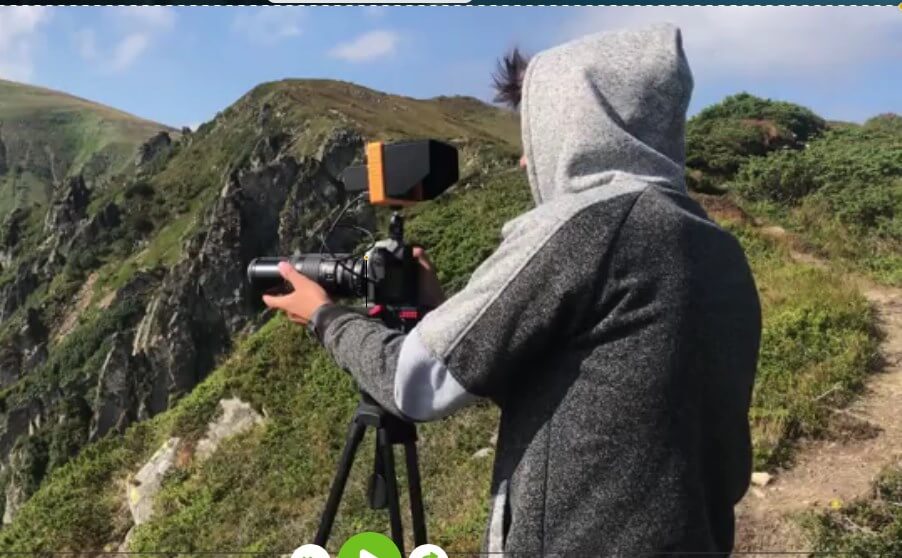
Think about the physical act of filming. Once you frame a shot, you have already established your point of view.
By deciding what goes into the frame and what gets left out, you are manipulating reality. Choosing exactly when to turn the camera on and off is a highly subjective decision.
Many film schools will tell you that an honest documentary filmmaker needs to show all the sides of the subject. That makes sense, but be careful! Most topics are not as simple as black and white, and there are a lot of greys. It would help if you found the grey area with the blackest colors and the white colors, but don’t attempt to give everyone sides. Sometimes there are just too many
You know, making a documentary is one of discovery, and like writing a story, you follow a lead and lead you to something else and then, by the time you finish, the story is nothing like you expect
William Shatner Tweet
Before you start writing your treatment or planning your shoot, you need a solid foundation in documentary storytelling.
Follow these steps to avoid common beginner traps:
Deepen Your Research: Do not just read a Wikipedia page. Speak to people, visit locations, and uncover details that aren’t available online. Good documentaries are built on exhaustive research.
Find the Narrative Lead: As William Shatner once said, making a documentary is a process of discovery. You follow a lead, and it takes you somewhere else entirely. Be prepared for your story to change.
Look for the “Grey Areas”: Many film schools tell you to show all sides of a subject. While you should be fair, remember that most issues are not black and white. Find the complex “grey areas” where the real drama lives.
Don’t Give Everyone a Voice: Attempting to give equal screen time to every single perspective will dilute your film. Sometimes, there are simply too many sides. Focus on the most compelling voices.
It is very difficult to critique a documentary simply by saying, “The subject isn’t interesting.”
A good critic does not judge the issue itself; they judge how the director introduced and explored it. The director must investigate their chosen characters and clearly articulate why they chose them.
When you are developing your treatment, you must ruthlessly evaluate your own concept.
Ask yourself over and over:
Why did I choose this specific project?
What unique perspective can I bring to this issue?
What can I reveal here that audiences have not seen before?
Stepping into the world of non-fiction cinema is both challenging and incredibly rewarding.
Successful documentary filmmaking requires you to balance the chaotic reality of your subjects with your own creative vision. You are not a human security camera; you are a storyteller.
Stop worrying about total objectivity. Do your research, treat your subjects with respect, and trust your instincts. Find your voice, and go tell the story only you can tell.