
Online Film School Free » Documentary Filmmaking Course » documentary filmmaking tips
Documentary Filmmaking Techniques
Table of Contents
Toggle
Whether you’re an aspiring filmmaker or a seasoned storyteller, mastering effective documentary filmmaking techniques is essential for creating compelling, impactful narratives.
From pre-production planning to post-production polish, there are countless documentary making tips that can elevate your work and help you connect deeply with your audience. In this guide, we’ll break down proven methods and expert strategies used by professional documentarians to bring real-life stories to the screen authentically, powerfully, and with purpose.
Key Documentary Filmmaking Techniques Every Beginner Should Know
Here’s a breakdown of the most widely used and effective techniques in documentary filmmaking and how you can start using them in your own work.
Voice-over Narration
Voice-over gives you, the filmmaker, the chance to guide the story, fill in missing context, or speak directly to the audience. It’s especially useful for connecting fragmented scenes or adding personal reflections. The key? Keep it natural and intentional. Find your own voice and it will serve the story, not just repeat what’s already on screen.
Interviews & Talking Heads
This is the backbone of many documentaries. Whether you’re interviewing an expert, an eyewitness, or someone personally involved in the story, interviews add credibility and emotional depth.
There is a lot to say about Preparing & Shooting A Documentary Interview, but here is what’s important to remember: Light your interviews well, use clean backgrounds, and capture reaction shots or b-roll cutaways to avoid “talking head fatigue.
Indirect Interviews & Natural Dialogue
Sometimes the best material comes when people forget the camera is rolling. Capturing unstructured conversations, off-the-cuff remarks, or raw emotional moments can be more powerful than formal interviews. These moments make your film feel real and unfiltered.
“Fly on the Wall” Photography
Also called observational cinema or cinéma vérité, this technique is all about being invisible. You simply follow the subject without interference. No voice-over. No staged scenes. Just reality unfolding. It’s raw, real, and deeply immersive.
Montage Sequences
Montages allow you to compress time, show progress, or build emotional beats using a series of short, edited shots. When paired with music or narration, they can create some of the most memorable moments in your film.
Choosing the Right Types of Footage
our story may be powerful, but without the right visual material, it won’t connect with your audience.
One of the most important planning steps in documentary filmmaking is deciding in advance what kinds of footage you’ll need. This helps you budget your time, focus your shoot days, and identify licensing or sourcing needs early.
Let’s break down the most common types of footage you can use — and when to use them:
Stock footage – Pre-recorded clips you can license. Great for establishing visuals or abstract concepts. Pros: Affordable, fast, and high-quality, Cons: Can feel generic if overused. Choose carefully and match the tone of your film
Archival footage – Historic or personal material like home videos, old news reels, or photos. Adds authenticity and context. Pros: Deepens the story with real-world evidence, Cons: May require licensing or research to find sources.
B-roll – The glue between interviews. This could be anything from close-ups of someone’s hands to shots of a town, environment, or action. It’s essential for visual variety and smooth editing. Pros: Essential for covering cuts in interviews and creating pacing, Tip: Always shoot more than you think you’ll need.
User-Generated Footage & Photos – Footage shot by your subject or community (like phone videos or social media clips) can make your film feel raw, intimate, and real. It also adds unique perspectives you may not have access to firsthand. Pros: Authentic, cost-effective, sometimes emotionally powerful, Cons: May be low quality – edit with intention and context.
Hand-Drawn Illustrations or Stylized Graphics – When real footage doesn’t exist or wouldn’t do the moment justice, consider using illustration, animation, or motion graphics. These can visualize data, tell abstract stories, or add a creative signature to your film. Pros: Engaging, educational, and flexible, Cons: Can be time-consuming or require a designer
Planning Tip:
Before filming, make a “visual wish list” of every type of footage you’ll need. This includes:
- What you plan to shoot yourself
- What you’ll need to source or license
- Where graphics or animation might fit best
Doing this ahead of time helps you stay organized — and gives your film a more polished, intentional feel.
The Art of Storytelling and Why It Starts with Research
Documentary storytelling isn’t just about capturing reality; it’s about shaping that reality into a story that resonates. Unlike fiction, where the world is built from imagination, documentary stories emerge from the real world. That’s what makes them powerful and also what makes them challenging. Because real life is messy. It’s non-linear. It doesn’t always offer clear heroes, villains, or tidy resolutions.
To tell a meaningful story, you need to do what all great storytellers do: start with deep understanding.
It All Starts with Research
Before you hit “record,” you need to immerse yourself in your subject. That means:
Reading articles, books, and academic work on your topic
Watching similar documentaries to see how others tackled the subject
Talking to people involved – whether they end up in the film or not
Visiting locations where key events took place
Why? Because the more you know, the better questions you’ll ask, the more meaningful moments you’ll recognize in the field, and the more prepared you’ll be to shape a narrative.
What Makes Documentary Storytelling Unique?
You’re working with real people and events, not scripted characters
You need to balance emotional storytelling with factual accuracy
The narrative often emerges during filming or even in the edit. Flexibility is key
You have an ethical responsibility to represent your subjects truthfully
You’re not just gathering footage, you’re uncovering a story. And often, that story isn’t what you thought it would be at the start. That’s why it’s important not to get too attached to a pre-written script. Let the story evolve.
Know Your Core Message
Ask yourself:
What do I want the audience to walk away with?
This question is your compass. It helps guide every decision – from the shots you take to the people you interview to the tone you set in post-production. So yes, research might not feel glamorous, but it’s the bedrock of a powerful documentary. Get curious. Ask questions. Go deeper than you think you need to.
The story is already out there – you just have to find it.
How to Visually Present Your Documentary
Once you know the story you’re telling, the next big decision is how you want to show it.
Do you want your audience to feel like they’re living inside the moment? Or are you guiding them from a distance with narration and visuals? Your visual storytelling choices will define the tone, pace, and emotional impact of your film.
There’s no single “right” way, but here are five powerful methods filmmakers commonly use to visually tell their story.
1. Through Action (Observational Footage)
Let the camera observe real life unfolding without interference. This approach (allso called cinéma vérité or “fly on the wall” — builds trust and intimacy. You’re not explaining; you’re showing.
- Best for: Personal stories, behind-the-scenes environments, raw emotion
- Tip: Keep your camera rolling even between “key moments” – real gold often lives in the in-between.
2. Through Interviews
Interviews help anchor your story, introduce characters, and provide context. You can use them as a central device or weave them between other visuals.
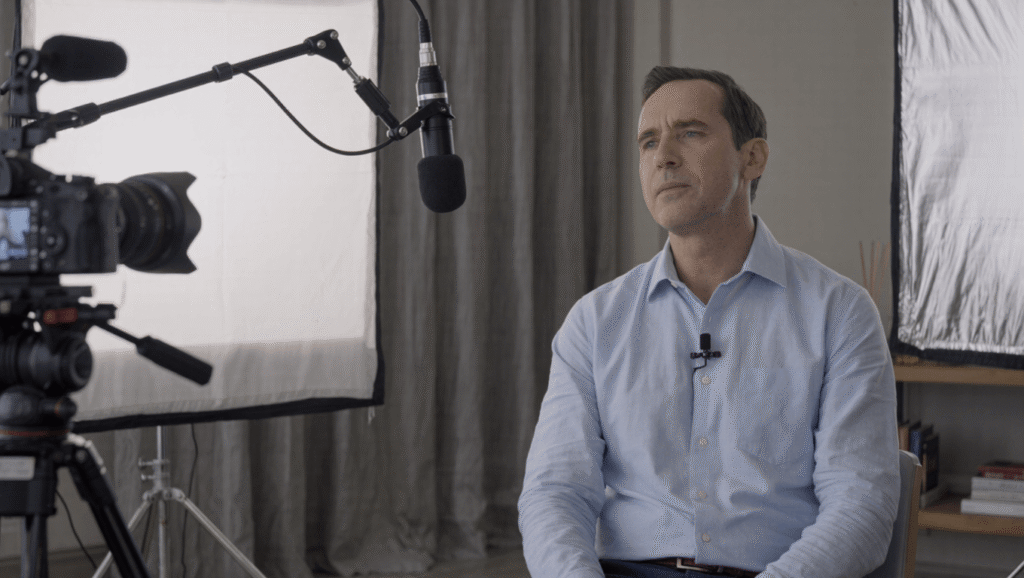
- Best for: Explaining complex topics, adding emotional depth, or capturing reflection
- Tip: Film in a quiet, visually interesting location and remember to shoot b-roll and reaction shots!
3. Re-enacting the Scene
If a critical moment wasn’t captured on camera, you can recreate it visually. This could be abstract, stylized, or even animated — it’s about evoking the moment, not faking it.
- Best for: Historical events, memories, or actions that happened off-camera
- Tip: Clearly signal that it’s a re-enactment to maintain audience trust.
4. Using Archival Footage
Old footage from news clips, home videos, or public archives adds depth, context, and a strong sense of time. It can also make your documentary feel more rooted in reality.
- Best for: Historical or biographical docs
- Tip: Always check licensing or fair use rules before using archive content.
5. Voice-over
Sometimes the best way to connect the dots is by narrating them yourself. A voice-over can help structure the film, fill in missing context, or reflect on what the audience is seeing.
- Best for: Personal storytelling, emotional reflection, or guiding narrative arcs
- Tip: Write your script like you’re talking to a friend, natural beats emotionless every time.
The key is to be intentional. You don’t have to pick just one method – most documentaries combine several. But every visual decision should support your story, your tone, and your audience’s experience.
You’re More Ready Than You Think
Documentary filmmaking can feel like standing at the edge of a vast, unpredictable story, but here’s the truth:
You don’t need to have it all figured out to start. You just need curiosity, a story worth telling, and the willingness to chase it. You’ve learn the most important documentary filmmaking techniques and now have the essential tools in your toolkit:
You understand the core techniques – from interviews to fly-on-the-wall observation
You know that storytelling starts with research, and it’s okay to adapt as things evolve
You’ve seen how to present your footage visually with purpose
And you’ve learned how to choose the right types of footage for impact
So go shoot. Go listen. Go find the truth.
And remember that the best documentaries don’t just inform.
They move us, change us, and stay with us long after the screen fades to black.